
AVA Human Form Recognition Camera
Meet AVA (Alert and Visual Awareness).
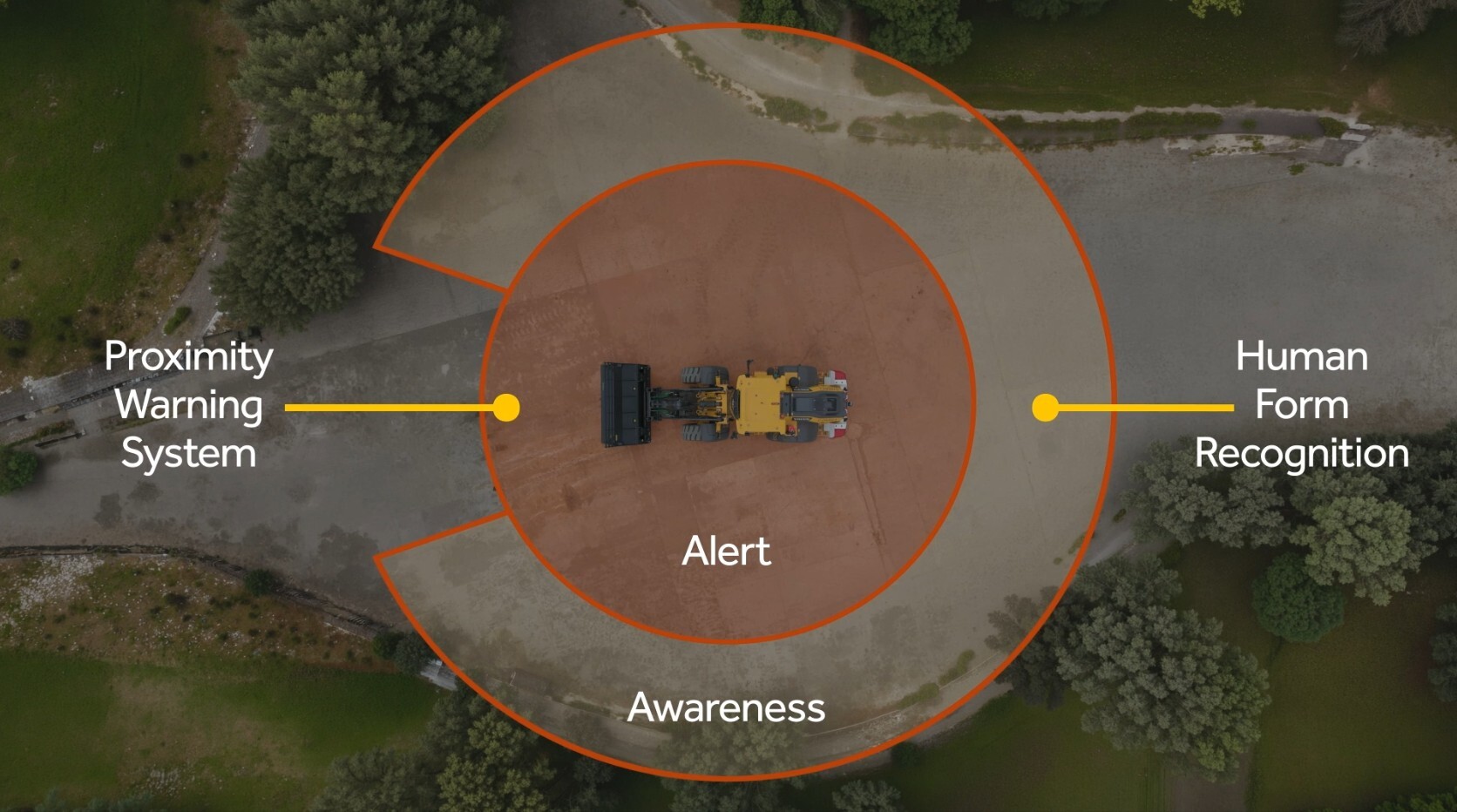
AVA combines the best of human form recognition (HFR) cameras with our proven proximity warning systems to give you complete detection, safety redundancy, and simplified data review.
How does the combined AI camera work?
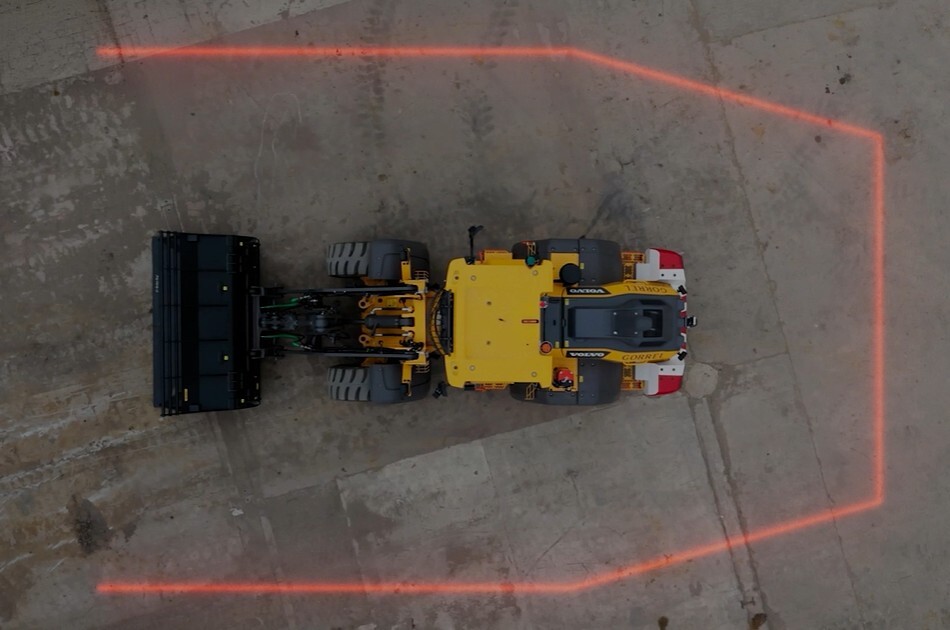
The SiteZone Proximity Warning System is the primary alert mechanism set at an industry standard 5-metre exclusion zone (or your risk assessed zone size).
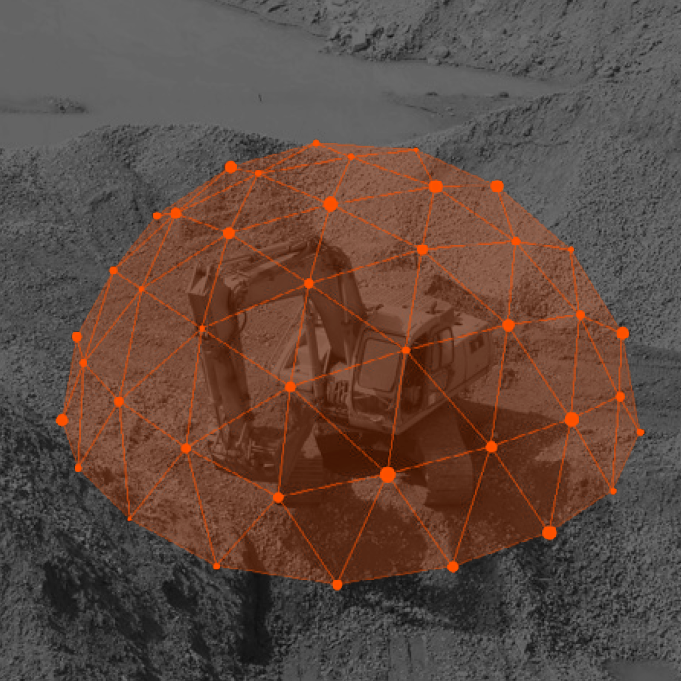
The HFR (Human Form Recognition) camera adds an awareness layer up to 10–15 metres. This awareness distance doesn’t alert, it gives the driver that enhanced situational awareness.
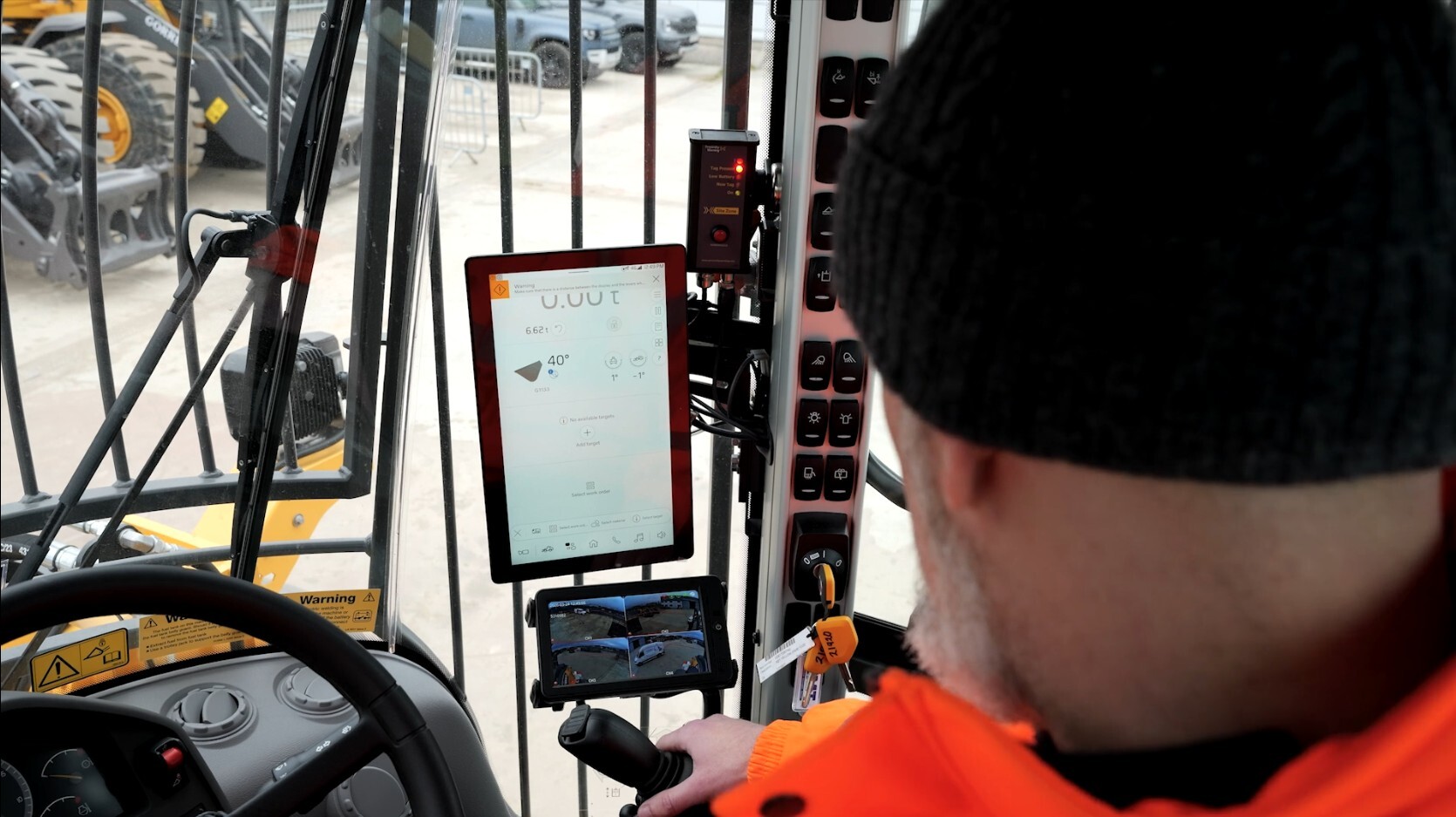
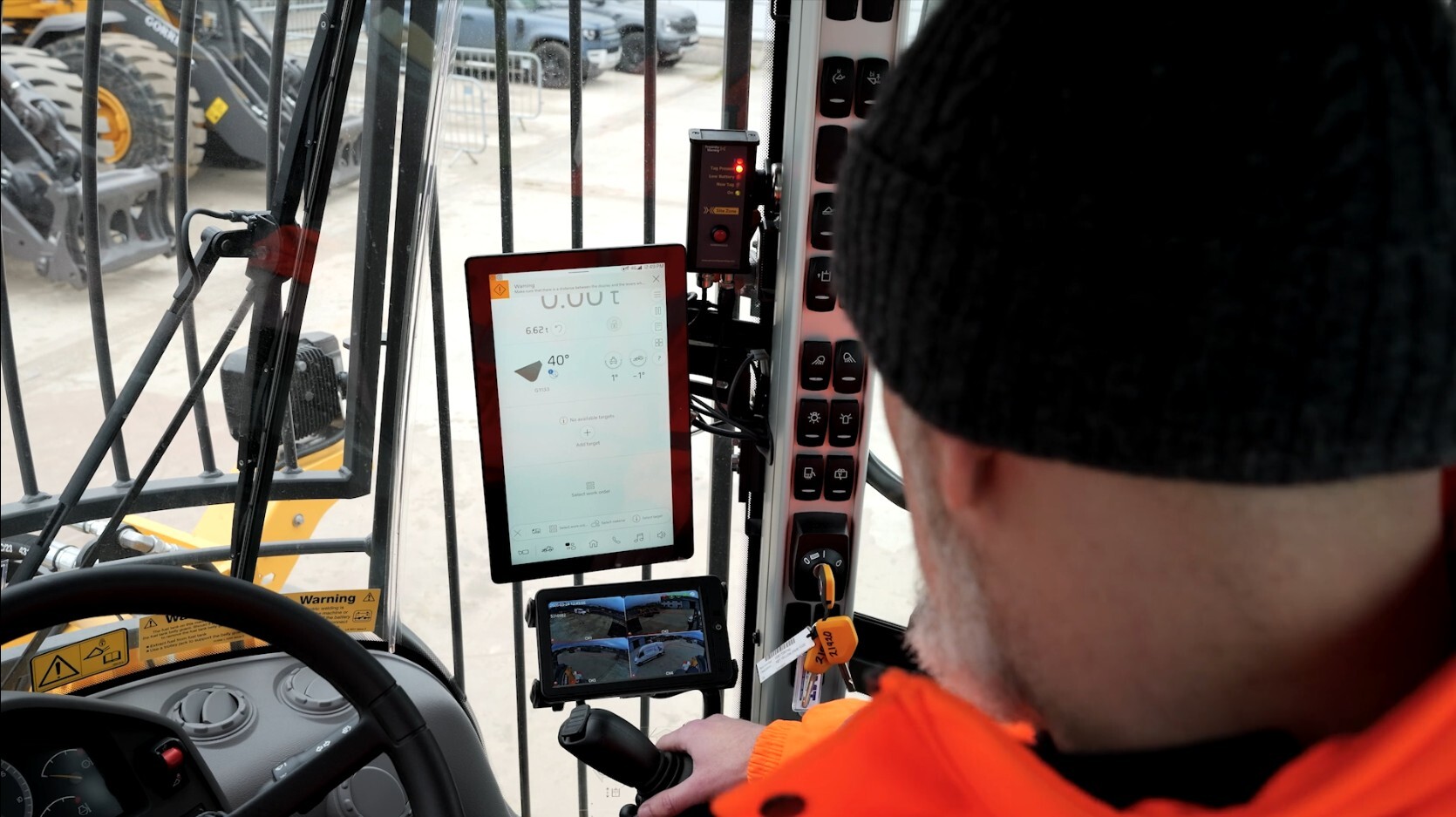
When a detection is made by the proximity warning system, that’s the point we download a video clip with 10 seconds before the detection and 20 seconds after.
So, video clips are tied in with the tag-based detections to make it quicker for you to view the footage you need to.
When two is better than one
The proximity warning system will always be the primary detection method (see below as to why). But when combined with a human form recognition camera (or AI camera as it’s often called), you get best-in-class detection for the plant-pedestrian interface.
How?
- Complete detection and awareness – the pedestrian is always detected, but now the driver has an extended zone of awareness
- Safety redundancy – if one system goes down, or doesn’t detect, the other one will. The US Naval SEALS are known for the phrase “Two is one, one is none”, meaning that if you only have one of an item, you effectively have none if it breaks or fails
- Simplified data review – video footage is tied to tag detections, so you have personalised identifiers of each detection to enable prioritisation of footage relating to risk
Why we don't install a camera alone
In most cases we would never install an AI camera alone. There are a few exceptions. And that’s sites where tags can’t be controlled and members of the public are a risk, such as Household Waste Recycling Centres and Agricultural environments where members of the public have footways across the land.
But why won’t we install an AI camera alone?
- They only see what’s in their line of sight – they don’t see round corners, waste piles, other vehicles, stacks of pallets, the list goes on….
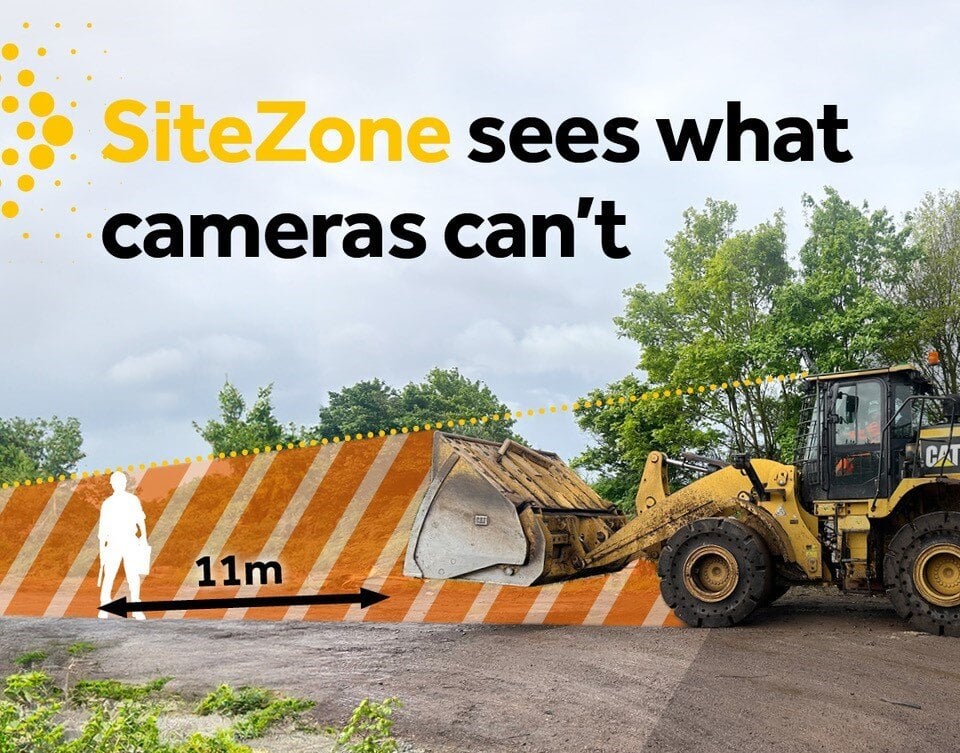
- They don’t see in front of a bucket or load – cameras cannot see for at least 11m in front of a large waste size bucket on a loading shovel (or other machines such as an FLT carrying a load). A prosecution by the HSE this year highlighted that a forklift truck driver’s view was obscured by the load being carried
- You’re not visible if you’re right next to the machine – they cannot detect under about 0.5m. This is important for startup visibility.
- They produce A LOT of data that if not reviewed and acted on could be used against you in court as ‘Failure to adequately assess and control a foreseeable risk’
Reducing the data burden
Cameras produce a lot of video footage. This creates two main burdens: Time to review and cost to transmit.
Each detection creates multiple videos. For an average site this can amount to a couple of hours of footage a day.
If you’re overloaded with all this data, how do you decide what to look at? You could be in danger of missing something important.
That’s where our combined camera and proximity warning data can help you.
We’ve streamlined the data transmission.
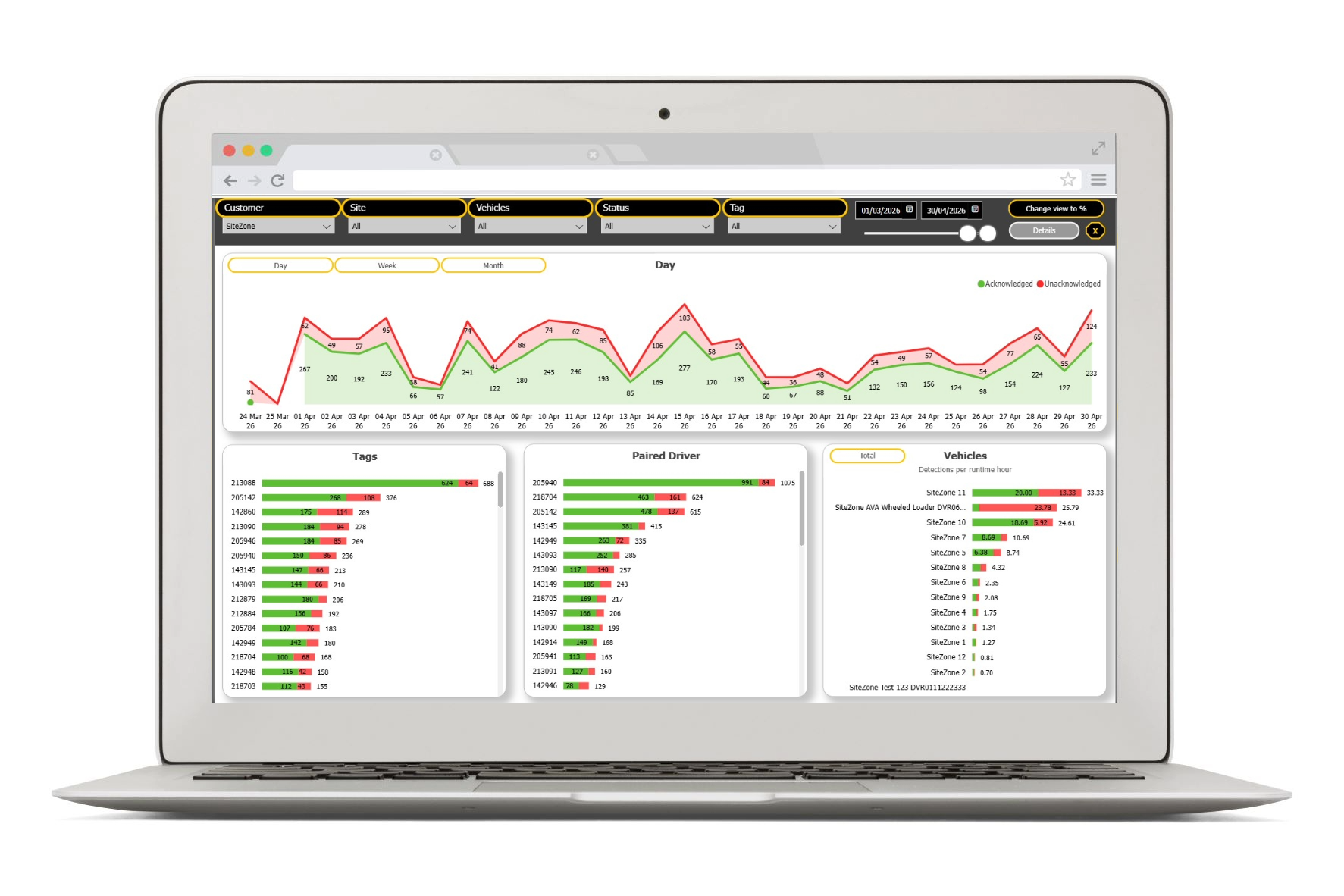
You get an individual identifier of the person, via the tag number. So, you can decide to look at the tag with most detections and focus your efforts in a targeted way, prioritising highest risks first.
See how AVA works
Articles on this product
Your SiteZone dashboard just got a major update
Sam BoshierApr 30, 2026 11:48:17 AM
We don’t want our data to be another dashboard that you don’t have time to view. So, every time we work on improving it, we use a core design...
Are you aware of psychosocial factors at work?
Sam BoshierApr 24, 2026 10:14:10 AM
A customer recently told us that ‘busyness’ is one of their biggest risk factors.
What does the HSE look for in workplace transport prosecutions?
Sam BoshierApr 16, 2026 10:43:05 AM
The expectations behind workplace transport safety are not a mystery. The standards are widely published; the risks are familiar; the failures that...